

More Than a Sticker: The RV Industry Association Seal Defined
 Safety is the Unifying Priority
In the RV industry, competition drives innovation. Manufacturers constantly differentiate themselves through floor plans, luxury features, interior aesthetics, and competitive price points. But when it comes to vehicle safety, the industry comes together.
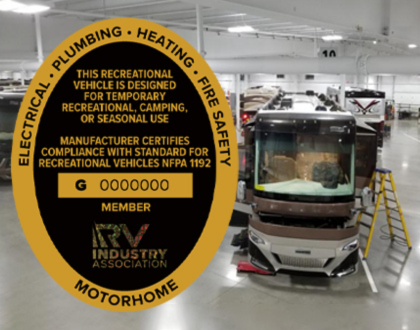
At the center of this collective commitment sits the RV Industry Association Seal. Far from being just a sticker on the exterior wall of a vehicle, the seal is a visible reminder that an RV or Park Model RV is certified by its manufacturer that it was built in compliance with rigorous, industry-adopted safety standards.
500+ Requirements: The Core Safety Codes
Displaying the seal communicates that a manufacturer has pledged in writing to construct vehicles conforming to specific safety codes adopted by the RV Industry Association's Board of Directors. These codes govern the major systems in an RV, most notably:
- NFPA 1192 Standard on RVs: Establishes criteria for fuel systems, plumbing, and fire & life safety.
- NFPA 70 National Electrical Code (NEC): Sets safety standards for modern wiring, overcurrent protection, and grounding.
- ANSI/RVIA DC Standard: Covers DC voltage systems.
- ANSI/RVIA A119.5 Park Model RV Standard: Establishes health, fire, plumbing, and structural safety requirements for park model RVs.
Together, along with five other adopted safety standards, these codes account for over 500 individual safety-related requirements impacting electrical, plumbing, heating, gas, and structural systems.
The Scale of Compliance: Over 2,000 Annual Inspections
Standards are only as strong as the verification process behind them. To enforce compliance, the RV Industry Association maintains a professional team of full-time inspectors.
Each year, these inspectors conduct more than 2,000 unannounced inspections across member manufacturing facilities. During these visits, inspectors:
- Walk the Line: Inspectors visit every station along the active assembly line.
- Spot-Check Units: Inspectors audit RV units under various stages of construction for adherence to code.
- Educate Frontline Staff: Inspectors engage directly with line personnel to answer questions and explain standard requirements in real time.
This process ensures that a member manufacturer’s self-certification is backed by ongoing Association audits.
The Ecosystem Impact
The RV Industry Association seal’s influence extends well beyond the manufacturing floor:
- For Manufacturers: The seal serves as evidence of their binding pledge to comply with the adopted safety standards across all production facilities.
- For Dealers: It provides clear assurance that inventory meets rigorous safety benchmarks before reaching the sales floor.
- For Campgrounds: Many public and private campgrounds in the U.S. require an affixed seal for park entry in part due to the trust these campground operators put into the seal and what it represents.
- For Consumers: It offers peace of mind that the hidden electrical, gas, and plumbing systems in their RV are self-certified by the manufacturer to meet the appropriate safety standard and that the manufacturer had to back up that certification by undergoing periodic unannounced audits.
When an RV displays the RV Industry Association Seal, it signals to everyone in the ecosystem that safety was prioritized from the ground up.
Please Sign in to View
Log in to view member-only content.
If you believe you are receiving this message in error contact us at memberservices@rvia.org.